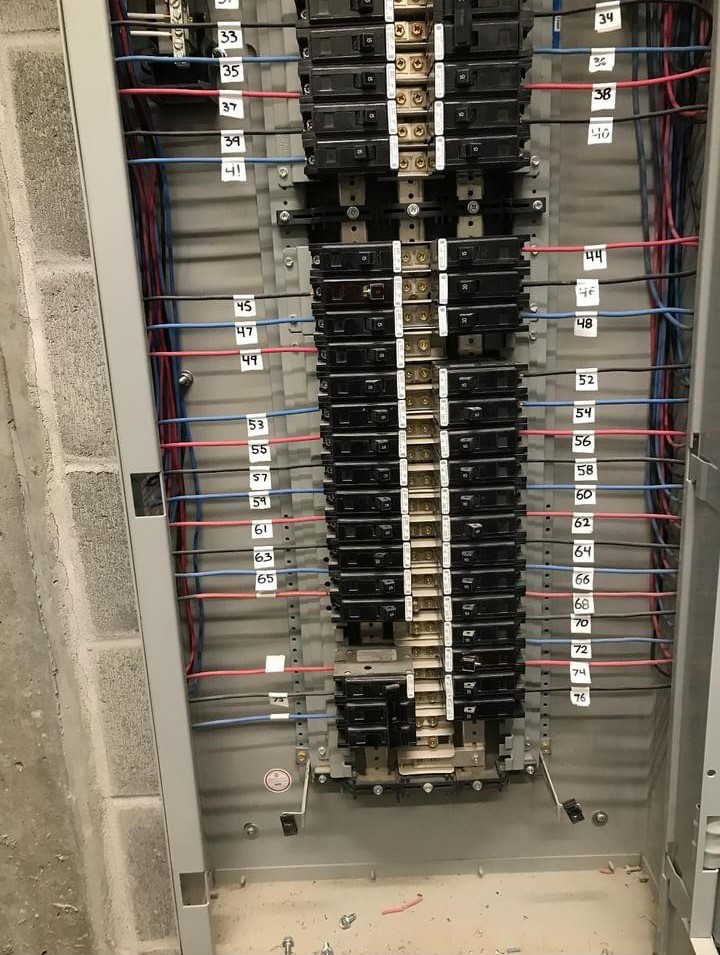
If your breaker keeps tripping, the good news is that it means your electrical system is doing exactly what it was built to do. A breaker trips to cut the power before a problem turns into an overheated wire or a fire. So the real question is not how to stop it from tripping. It is what is causing it, because that is the part that actually needs fixing.
Here is a plain-language rundown of the usual causes, the checks you can safely do yourself, and the point where it is worth calling an electrician.
What a tripping breaker is actually telling you
A breaker constantly watches the amount of current flowing through its circuit. When that current goes above a safe level, or the breaker senses a fault, it flips off and cuts the power. That is the whole job. So a trip is a symptom, not the disease. Resetting the breaker without finding the cause is a bit like silencing a smoke alarm without checking whether something is burning.
Once you know that, the useful step is figuring out which of a few common causes you are dealing with.
The most common cause: an overloaded circuit
By far the usual culprit is simply too much demand on one circuit. Every circuit is rated for a certain load, and high-draw appliances add up fast. Space heaters, hair dryers, kettles, microwaves and window air conditioners are all heavy hitters, and running a couple at once on the same circuit can push it over the limit.
Signs it is an overload: the breaker trips when you run a specific appliance or several at the same time, and it is usually the same breaker each time. The fix is often as simple as spreading those devices across different circuits. If it keeps happening even with a sensible load, the circuit may be doing more than it was designed for, and adding a dedicated circuit or upgrading the panel is worth looking at. See our panel and service upgrades for what that involves.
Short circuits
A short circuit happens when a hot wire touches a neutral wire, which lets a large surge of current flow and trips the breaker instantly. This one is more serious than a simple overload.
Signs of a short: the breaker trips the moment you reset it, and you might notice a scorch mark, a bit of melted insulation, or a burning smell at an outlet or in a specific device. A short can come from a damaged cord, a failing appliance or a fault in the wiring itself, and it is not a do-it-yourself fix.
Ground faults
A ground fault is when a hot wire contacts a ground or another path it should not, often involving moisture. These are most common in bathrooms, kitchens, garages and outdoor outlets, which is exactly why those areas use GFCI protection that trips quickly to prevent a shock.
Signs of a ground fault: a GFCI outlet (the kind with little test and reset buttons) trips, frequently in a damp or outdoor location. Sometimes the cause is a faulty appliance, and sometimes it is moisture that has found its way into an outlet.
A worn-out breaker or an aging panel
Breakers are mechanical, and like anything mechanical they wear out. A tired breaker can start tripping below its rated load, or refuse to reset at all. Beyond the individual breaker, older panels can simply be past their prime, and a few brands, most notably Federal Pioneer Stab-Lok, have a documented history of breakers that do not trip reliably.
If your panel is old, full, or one of the known-problem brands, it is worth having it assessed rather than fighting a breaker that keeps acting up. That is one of the most common reasons we recommend a panel upgrade.
Stop and call right away if you notice a burning smell, scorch marks, a warm or discoloured panel, or buzzing. Those are signs of a fault that can start a fire, so do not keep resetting the breaker. Get it looked at or call us at 780-224-3951, any time.
What you can safely check yourself
There are a few safe things you can try before picking up the phone:
- Note which breaker tripped and what is plugged into that circuit.
- Unplug everything on the circuit, then reset the breaker one time.
- Plug things back in one at a time to find the device that trips it.
- Try a high-draw appliance on a different circuit to see if the load was the problem.
- If it is a GFCI outlet, press its reset button and see if that restores power.
One important caution: reset a breaker only once. If it will not stay reset, do not force it. A breaker that refuses to hold is telling you there is a real fault, and forcing it is not safe.
When to call an electrician
It is time to bring in a pro if any of these are true:
- The breaker trips again the instant you reset it.
- It trips with little or nothing plugged into the circuit.
- There is a burning smell, warmth, buzzing or scorching anywhere.
- The same circuit keeps tripping over several days.
- You have an older or recalled panel.
- Anything about it feels unsafe or you are simply not sure.
When we come out, we diagnose the actual cause instead of guessing, so you get a real fix rather than a temporary reset. See how we approach troubleshooting and repairs, and if it traces back to an overloaded or aging panel, we can talk through adding a circuit or upgrading the panel.
Key takeaways
- A tripping breaker is a safety feature doing its job, not a defect to silence.
- Most trips are overloaded circuits, but some are short circuits or ground faults.
- Reset a breaker only once, and never force one that will not hold.
- A burning smell, buzzing or scorching means stop and call an electrician now.
- Repeated trips point to a fix worth making, not just another reset.
Breaker still tripping?
We will find the actual cause and fix it properly, and we are on call 24/7 for anything urgent. Get a free quote or call us any time.
Get a free quote Call 780-224-3951Frequently asked questions
Is it safe to keep resetting a tripped breaker?
Resetting it once to test is fine. Repeatedly forcing a breaker that will not stay reset is not, because it is tripping in response to a real fault. If it will not hold, stop and have it diagnosed.
Why does my breaker trip at the same time every day?
That usually points to a scheduled load, like a block heater, water heater or air conditioner cycling on and pushing an already-busy circuit over the edge. Spreading the load or adding a circuit typically solves it.
Can a tripping breaker cause a fire?
The breaker is actually preventing one. The danger comes from ignoring the cause or bypassing the breaker. If you notice a burning smell or scorching, call an electrician right away.
Do I need a new panel if my breaker keeps tripping?
Not always. Often it is a single overloaded circuit that just needs load spread out or a dedicated circuit added. But if the panel is full, old or a known-problem brand, an upgrade may be the right fix. We will tell you honestly which it is.